

After a decade cracking the code on affordable healthy food, Everytable looks to grow
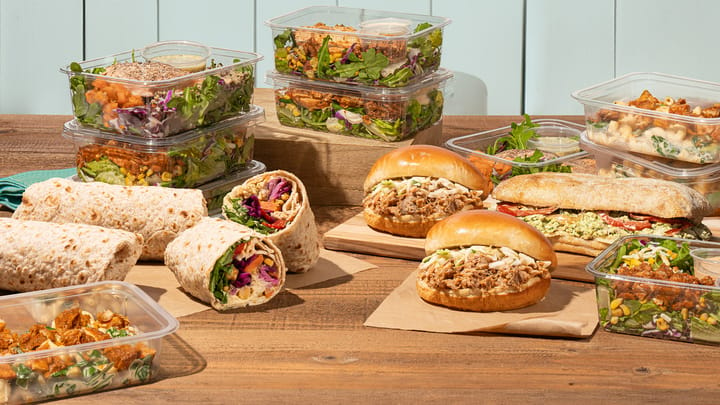
Founder and CEO Sam Polk shares the business model that allows the 40-plus-unit brand to keep prices low.
June 17, 2026
When Everytable opened its first location in Los Angeles in the summer of 2016, it had a big, fat, lofty goal: serve healthy fast food at more affordable price points, particularly in low-income neighborhoods.
But where many other brands had tried and failed to achieve this goal, Everytable founder Sam Polk — a former hedge fund trader — tackled the problem with a more analytical approach, breaking down the entire restaurant model to find efficiencies that allowed him to save on costs and pass that saving on to the customer.
The result is a business powered by commissary kitchens where local ingredients are prepared and packed in grab-and-go containers, then shipped directly to locations. With little prep necessary on site, Everytable locations can be small and staffed often by just one person. Prices in lower-income neighborhoods are kept low, subsidized by higher prices in higher-income neighborhoods.
This model has helped Everytable grow to more than 40 locations in the last decade, and it plans to hit 50 by the end of the year and expand beyond its California base.
Polk joined the latest episode of Take-Away with Sam Oches to talk about how Everytable’s mission has evolved over the last 10 years and about how it’s perfectly positioned to bring healthier foods to lower-income neighborhoods far beyond its California base.
In this conversation, you’ll learn more about why:
The healthy food movement has a business model problem
A streamlined kitchen opens new growth opportunities
The value equation is a sliding scale that varies customer by customer and city by city
Mission-driven businesses must have clear alignment with the bottom line
Community-driven franchisees can be leveraged for more dependable, consistent business
The healthy food movement has a business model problem
A streamlined kitchen opens new growth opportunities
The value equation is a sliding scale that varies customer by customer and city by city
Mission-driven businesses must have clear alignment with the bottom line
Community-driven franchisees can be leveraged for more dependable, consistent business
Contact Sam Oches at [email protected].
About the Author
Sam Oches
Editor in Chief
Sam Oches is an award-winning Editorial Director with Informa Connect Foodservice and editor in chief of Nation's Restaurant News and Restaurant Hospitality. A graduate of the E.W. Scripps School of Journalism at Ohio University in Athens, Ohio, Sam previously served as Editorial Director of Food News Media, publisher of QSR and FSR magazines. He’s a past president of the International Foodservice Editorial Council (IFEC) and a past board member with the American Society of Business Publication Editors (ASBPE). His foodservice insights have been shared in national media outlets such as the New York Times, USA Today, National Public Radio, and CNBC. He lives in Columbus, Ohio, with his wife and three kids.
Content Spotlight
The Technomic Top 500: Another tough year for chain restaurants
Top 500 chain restaurant sales slowed again in 2025 as consumers cut back on dining, but sectors like coffee, beverages and snacks and chicken thrived
Featured
Jun 10, 2026
Jun 4, 2026
Recent News
Content Spotlight
Get to know Rick Cardenas, the Darden CEO who started there as a busser
The executive shares his advice, along with his most-binged TV show, favorite sports team, and most-used app
Source: This story originated with Nation's Restaurant News.
View Original Article →