

Plant-based burgers are becoming more vegetable-focused at QSRs
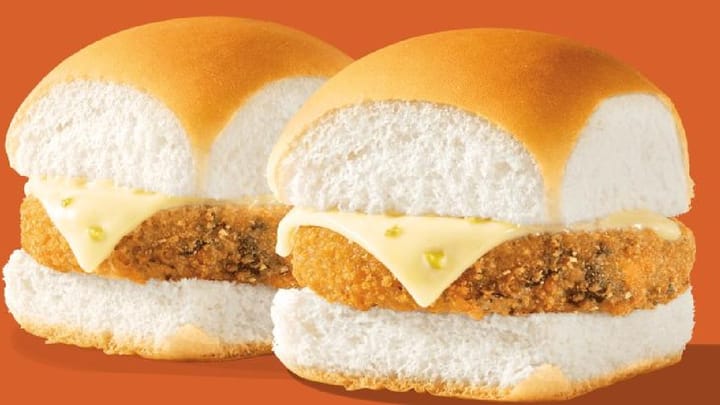
There’s a movement away from meat analogs to real veggies on burger menus, with White Castle, Culver’s, and Shake Shack leading the way.
June 11, 2026
White Castle is the latest fast-food chain to offer a plant-based burger made of vegetables with the debut of its veggie slider last week. It’s a clear move away from the dominance of Impossible Foods and Beyond Meat and their faux meat patties.
In fact, Columbus, Ohio-based White Castle had introduced an Impossible Slider back in 2018, when plant-based meat analogs took the burger segment by storm. That slider was discontinued in 2025, replaced by the new Southwest Veggie Slider. The new item, featuring a Dr. Praeger’s meatless patty, is a blend of sweet potatoes, black beans, corn, red bell peppers, onions and carrots in a crisp brown rice crust. White Castle’s version is seasoned with smoky chipotle and sweet barbecue flavors and topped with jalapeño cheese; customers can opt for less spicy American or cheddar cheese if they wish.
Although White Castle put a more positive spin on the change, there’s been significant backlash against fake meat of late. Consumers became disenchanted with the long lists of unrecognizable ingredients on processed meat analogs, and plant-based products made by Impossible Foods, Beyond Meat and others who went that route fell out of favor. At the 2026 National Restaurant Association Show held last month in Chicago, there was a noticeable absence of plant-based meat and chicken processed in labs, with more natural veggie-based products on the rise.
Indeed, according to Technomic’s Ignite Menu database, the number of chains offering an imitation meat burger is down 8.9% year over year. The year 2021 was the height of the trend, but it has been on the decline every year in the five years since.
White Castle’s shift was motivated by consumer insights and a desire by guests for a more natural, veggie-forward option, said the company. In research conducted last summer, the chain discovered the flavors, ingredients and overall profile customers wanted most in a nonmeat slider.
“White Castle is pleased to be partnering with Dr. Praeger’s on our new one-of-a-kind Southwest Veggie Slider,” said CMO Jamie Richardson in an email to Restaurant Business. “We know tastes are constantly evolving and we want to provide cravers everywhere a craveable non-meat option they can sink their teeth into, especially for those who tell us they are most interested in distinctive flavor rather than a beef substitute.”
At burger chain Culver’s, offering a meat analog was never on the table. In fact, the Wisconsin-based brand started developing its own signature veggie burger way back in 2016, finally launching it in 2020, saying that it was eager to honor its longtime commitment to farmers and producers and offer guests the “Culver’s experience.”
The result is the Harvest Veggie Burger composed of roasted corn, red and green bell peppers, chickpeas, spinach, portobello mushrooms, barley, wheat berries and two types of Wisconsin cheese—queso fresco and a small amount of domestic Parmesan. It’s a vegetarian rather than a vegan burger, but the vegetables are front and center and so are local ingredients.
Shake Shack rolled out the Veggie Shack three years ago, featuring a patty made with mushrooms, sweet potatoes, carrots, farro and quinoa. It’s topped with American cheese, crispy onions, pickles and Shack Sauce and served on a potato bun, but those extras and the bun can be omitted to make it vegan.
Several chains still offer Impossible and Beyond burgers, with Burger King one of the most prominent with its Impossible Whopper on the permanent menu. It started out on its own but has since gone through limited-time iterations. The most recent is the Impossible Peppercorn BLT Whopper with Bacon, Swiss cheese and peppercorn aioli introduced earlier this year.
Clearly not for vegans and not even vegetarians. But from the start, Impossible and Beyond products were designed for burger eaters who wanted a “healthier” plant-based alternative from time to time. Only 4% of the general population identifies as purely vegetarian, according to a recent Gallup Poll, although younger generations skew higher. But 41% of consumers eat a vegetarian meal at least once a week, found Technomic.
Other chains have not been as committed to meat analogs as Burger King. Carl’s Jr. and Hardee’s partnered with Beyond Meat in 2017, offering the Beyond Famous Star Burger. The sister chains have since discontinued that branded burger. Wendy’s has never offered a faux beef burger in the U.S. but did test a limited-time Spicy Black Bean Burger several years back. It never made it to the permanent menu.
There are still plenty of meat alternatives out there, with plant-based sausages, chicken and pork staples on a number of menus. But consumer sentiment seems to be moving toward products made with real vegetables and natural ingredients. Even Beyond Meat is branching out. The company has changed its name to simply “Beyond” and has now moved into the functional beverage sector. The drink is called Beyond Immerse and is formulated with pea protein.
About the Author
Patricia Cobe
Senior Editor, Restaurant Business
Pat came to Informa Connect from Hearst, where she was an executive editor. She is the co-author of the Mompreneurs series of books as well as two cookbooks. She graduated from Cornell University and earned a Masters in Journalism from Boston University. She is active in several professional organizations, including Les Dames d’Escoffier and the International Foodservice Editorial Council (IFEC), and serves as a judge for the James Beard Media Awards.
Content Spotlight
The Technomic Top 500: Another tough year for chain restaurants
Top 500 chain restaurant sales slowed again in 2025 as consumers cut back on dining, but sectors like coffee, beverages and snacks and chicken thrived
Featured
Jun 10, 2026
Jun 4, 2026
Recent News
Content Spotlight
Get to know Rick Cardenas, the Darden CEO who started there as a busser
The executive shares his advice, along with his most-binged TV show, favorite sports team, and most-used app
Source: This story originated with Nation's Restaurant News.
View Original Article →