
Steve Ells’ sandwich concept Counter Service prepares to shift growth outside New York City
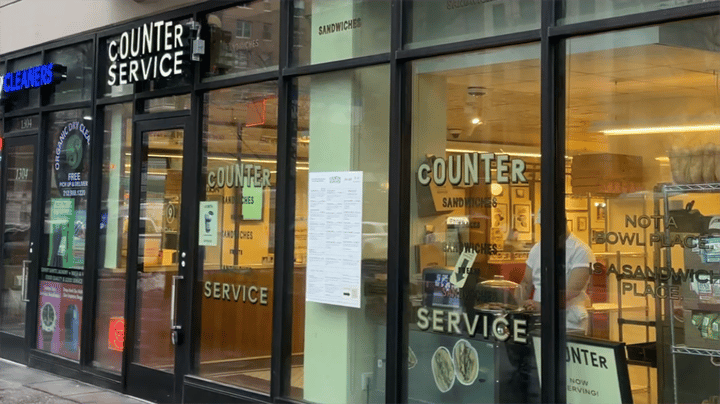
Ells and the fast-casual chain’s CEO Tom Cortese see the sandwich segment as ripe for disruption.
July 21, 2026
Steve Ells was 26 when he founded Chipotle in 1993 and set out to disrupt what we know as American fast food.
Things were different then, said Ells at the 2026 CREATE conference at the Terranea Resort in Rancho Palos Verdes, near Los Angeles. The energy was different, he said.
“I just jumped in and started cooking the food I wanted to cook, and I didn’t worry about what other people wanted,” he told Nation’s Restaurant News Editor-in-Chief Sam Oches during the Operator Spotlight on Monday. “I just did this because I thought it was going to be great, because I liked it. And slowly we built a fan base.”
Now Ells is looking to disrupt the limited-service category again with the new Counter Service, a now five-unit sandwich brand that is preparing to take its first step outside New York City.
Ells was joined on stage by partner Tom Cortese, who co-founded another disruptive brand: Peloton. Cortese is now CEO of the growing Counter Service concept, with Ells as COO.
The two met through an investor about a year into Ells’ experiment with the new restaurant concept, which initially had the name Kernel.
The original idea was vegan, and it involved a lot of robotics.
“I thought the food was delicious,” Ells deadpanned. “And so did a few of my customers.”
Cortese admits that when he first met Ells, he said, “I thought he was absolutely bonkers.”
But he admired Ells’ clear vision, he said.
“Whether this idea is the right idea or not, there’s a new opportunity to reinvent the system of fast food,” he said. “We, as Americans, are probably going to keep eating fast food. How can we continue to push the limits and make great food fast?”
Cortese said he initially thought he would join the team as a “founder’s helper.”
It didn’t take long for Ells and Cortese to realize the concept needed to be tweaked and Cortese found himself going all in. What was Kernel morphed into the sandwich concept Counter Service, which Ells still intends to serve as a platform to demonstrate that food can be fast and better.
It’s a different world than when Ells was starting Chipotle, he said. There’s more competition, more technology. “It’s harder to get people’s attention,” he said.
But the sandwich world is ripe for reinvention, argued Cortese.
“The vast majority of the dollars spent in sandwiches in the U.S. goes to sandwiches made on manufactured bread with cold cuts, processed cold cuts,” said Cortese. “And the reason they do that is because those are low input cost items that travel in a supply chain for a long time, because they’re half non-perishable, and that’s what customers are buying.”
At Counter Service, however, the bread is made with four ingredients: flour, water, yeast and salt.
The bread is baked fresh daily and sandwiches are made with “beautiful cuts of meat that are marinated and cooked to perfection, sliced or shredded,” Ells said. All condiments, garnishes and pickles are made in house.
That’s a complex operation. But Ells hopes to remove some of the operational challenges that make such elevated fare difficult. Technology is being used in less customer-facing ways to remove some of the cognitive load, for example.
The company, for example, has an “ingenious methodology” that could detect whether the team member has assembled the order correctly in the bag — incorrect orders being one of the things that pisses off guests the most. That technology would give that team member more ability to focus on engaging with the guest and being more hospitable.
But the two are still learning about the business they are creating. Ells and Cortese said they were off to North Carolina this week to look at potential next sites, and Charlotte is a likely next market. Dallas could be soon, too.
“We want to show up in a few different neighborhoods around the United States, not just in and around Manhattan,” said Cortese. “And we want to talk to those folks, meet those people in those neighborhoods, and introduce them to what we’re making. And we’re going to learn from them.
“We’re going to learn what they love about it, what doesn’t work for them, and that’s going to help us adjust and make it better,” he added. “And I think we’re going to find pockets all around the country where people love these sandwiches as much as we do.”
About the Author
Lisa Jennings
Executive Editor, Restaurant Business
Lisa Jennings is a veteran restaurant industry reporter and editor who covers the fast-casual sector, independent restaurants and emerging chain concepts. Her experience includes other industry publications as well as the daily newspaper The Commercial Appeal in Memphis, Tenn., where she was Food Editor. Her work has been cited in the Los Angeles Times, Business Insider, FoodBeast, The Huffington Post, Time.com and more.
Content Spotlight
The Technomic Top 500: Another tough year for chain restaurants
Top 500 chain restaurant sales slowed again in 2025 as consumers cut back on dining, but sectors like coffee, beverages and snacks and chicken thrived
Featured
Jul 16, 2026
Jul 8, 2026
Recent News
Content Spotlight
Get to know Rick Cardenas, the Darden CEO who started there as a busser
The executive shares his advice, along with his most-binged TV show, favorite sports team, and most-used app
Source: This story originated with Nation's Restaurant News.
View Original Article →