

Why Starbucks thinks smaller stores will translate into more growth
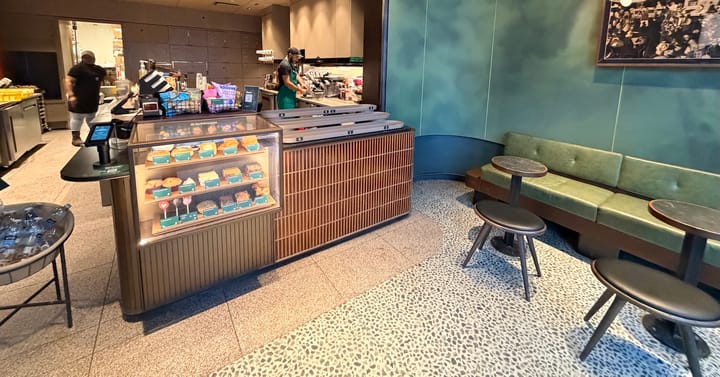
The fast-food coffee chain believes that smaller footprint locations, even with drive-thrus, can help it open another 5,000 U.S. units, and as many as 10,000.
June 11, 2026
Starbucks believes it can get bigger by getting smaller.
Specifically, the coffee shop giant wants 5,000 more locations in the U.S., and believes that it knows the markets where it can open those units. But the locations it plans to open will be smaller than those it has historically opened.
“We were getting to 2,500 square feet, and they needed a full acre,” Cathy Smith, Starbucks CEO, said at the Bernstein Conference this week. “If you start diagnosing that, you realize that we should have a great coffee house experience with all four access points on a half-acre and a smaller footprint.”
Starbucks is the country’s second most prolific restaurant chain, with nearly 17,000 shops, though it finished 2025 with about 80 fewer locations after shutting some shops in its revitalization bid.
Just under two-thirds of those locations are corporate units, with the remaining licensed shops in places like airports, universities or Target stores. Another 5,000 shops would give the chain about 22,000, not including the number of locations that licensees open—another, quieter area of focus for the company.
Starbucks’ expansion strategy will likely focus more on the Midwest, which is a key reason the Seattle-based company is opening a support center in Nashville.
“We’re really underpenetrated in the middle of the country, and call it Texas up to Virginia,” CEO Brian Niccol told investors at the Evercore Consumer and Retail Conference, according to a transcript on the financial services site AlphaSense. “For whatever reason, we just have had a West Coast-East Coast bias and didn’t develop in the middle of the country.”
He specifically cited Nashville. “We have a handful of licensed stores inside hotels, but we probably should have at least a dozen Starbucks in that area,” Niccol said. Even some suburbs, he said, should be better populated with the chain’s shops.
Getting to that point, however, will require healthy enough unit economics for that to happen. Those unit economics will come from better sales and cheaper locations.
At the company’s Investor Day presentation earlier this year, Starbucks showed off one potential, smaller location, at about 1,350 square feet. But the company could theoretically open shops that are less than 1,000 square feet.
These shops would still have drive-thrus, delivery, in-store, and mobile ordering. And they would still have seats. But they would be cheaper to build, requiring half the acreage.
Niccol, in fact, did not stop at just 5,000 locations. “There’s probably another 5,000 sites that we can add on top of the 5,000 that we’ve already identified,” he said. “And that’s how you get to 10,000 additional stores in the U.S.”
But that also requires the company to build sales. Starbucks is not the only coffee chain adding locations right now. Dutch Bros and 7 Brew are expanding quickly, as are several smaller brands. Dunkin’ is eyeing the Midwest for growth. The newer entrants in particular are expanding with business models that generate sales all day, rather than with a morning-heavy business. Those concepts are also competing for the same sites.
That makes it vital for Starbucks to build that afternoon business, something the company is doing with a combination of improving operations, more seats and friendlier in-store environments, and a lot of innovation—particularly with its Refresher beverage platform. That could generate incremental sales and revenue, which makes the return on those smaller locations even better.
“I think there’s a real opportunity to create a second peak around the afternoon between 2 p.m. and 5 p.m.,” Niccol said. “And I think it can be driven by drinks.”
About the Author
Jonathan Maze
Editor in Chief, Restaurant Business
Restaurant Business Editor-in-Chief Jonathan Maze is a longtime industry journalist who writes about restaurant finance, mergers and acquisitions and the economy, with a particular focus on quick-service restaurants. He writes daily about the factors influencing the operating environment, including labor and food costs and various industry trends such as technology and delivery.
Content Spotlight
The Technomic Top 500: Another tough year for chain restaurants
Top 500 chain restaurant sales slowed again in 2025 as consumers cut back on dining, but sectors like coffee, beverages and snacks and chicken thrived
Featured
Jun 10, 2026
Jun 4, 2026
Recent News
Content Spotlight
Get to know Rick Cardenas, the Darden CEO who started there as a busser
The executive shares his advice, along with his most-binged TV show, favorite sports team, and most-used app
Source: This story originated with Nation's Restaurant News.
View Original Article →